
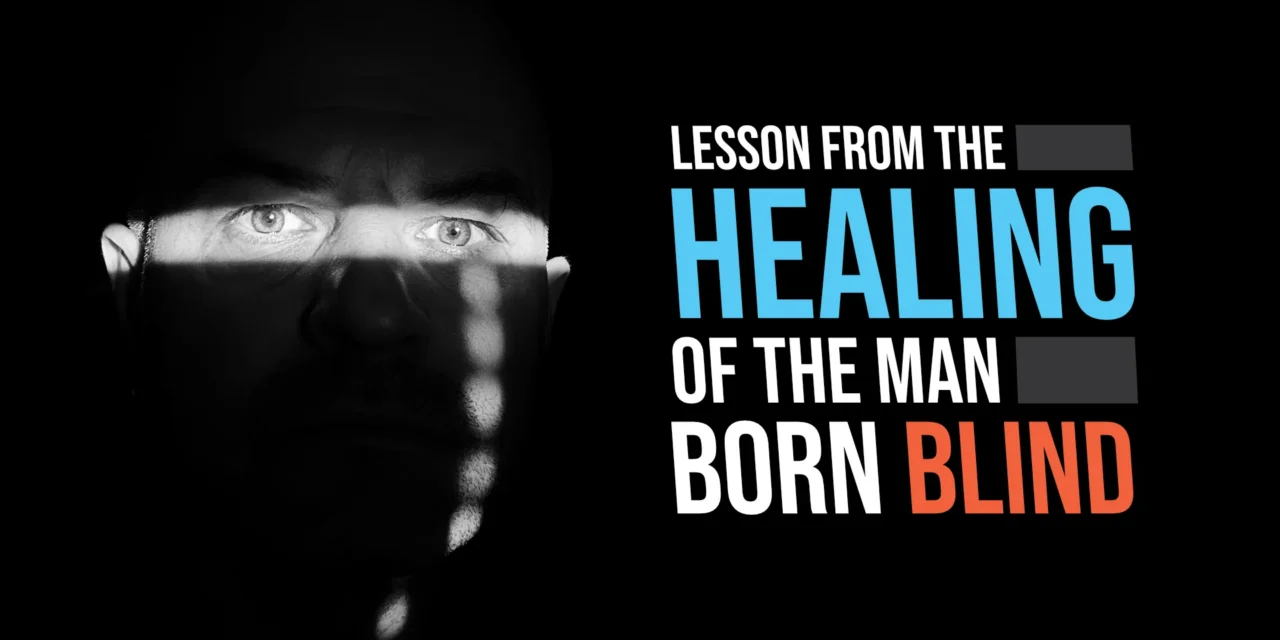
In the biblical record in John 9, which narrates the account of Jesus healing the man born blind, there are multiple and varied lessons we can learn.
Some physical ailments are opportunities for the demonstration of God. In response to a question from His disciples, “Jesus answered, Neither hath this man sinned, nor his parents: but that the works of God should be made manifest in him” (9:2-3). The blindness was not a chastisement. It was an an opportunity for God to work in the blind man a wonderful, life-changing miracle.
Faith must respond to divine initiation to receive divine demonstration. “When he [Jesus] had thus spoken, he spat on the ground, and made clay of the spittle, and he anointed the eyes of the blind man with the clay. And said unto him, Go, wash in the pool of Siloam…He went his way therefore, and washed, and came seeing” (9:6-7). Jesus said, Go, wash, but the blind man had to trust to obey. He went…washed, and came seeing. It is wonderful to be stirred by God. But God’s way is active faith, not passive fate. Faith must respond to access the will of God in experience.
You can miss the blessing by focusing on misunderstood details. “Therefore said some of the Pharisees, This man is not of God, because he keepeth not the sabbath day. Others said, How can a man that is a sinner do such miracles? And there was a division among them” (9:16). The Pharisees missed the manifestation of the glory of God by focusing on their misperceived notion of the Sabbath. They had added their traditions to the law of God and created a religious idolatry that blinded them from seeing the works of God. I’ve heard some say, “That couldn’t be real revival because….” Then they name some matter that doesn’t fit with how they perceive God works. Man made ideas of how God works block the view of God. Some matters are unnecessary additions. Other matters are legitimate, but not as important as what people think. They are not unimportant, they are less important. But when viewed as all-important, what is of greater importance gets missed.
Common sense sees God’s hand when religious particularism does not. “He answered and said…one thing I know, that, whereas I was blind, now I see…Why herein is a marvellous thing, that ye know not from whence he is, and yet he hath opened mine eyes…Since the world began was it not heard that any man opened the eyes of one that was born blind” (9:25, 30-32). This man had more sense than the religious leaders who focused on their traditions more than the obvious hand of God.
The greatest test of the Spirit is whether the result points people to Jesus. “Jesus heard that they had cast him out; and when he had found him, he said unto him, Dost thou believe on the Son of God? He answered and said, Who is he, Lord, that I might believe on him? And Jesus said unto him, Thou hast both seen him, and it is he that talketh with thee. And he said, Lord, I believe. And he worshipped him” (9:35-38; cf. 1 John 4:1-5). If you make particulars of tradition the test of a work of God, you will miss out on the work of God. The first and greatest test is whether there is a right view toward Jesus Christ.
Self-righteousness is what blinds. “And some of the Pharisees which were with him heard these words, and said unto him, Are we blind also? Jesus said unto them, If ye were blind, ye should have no sin: but now ye say, We see; therefore your sin remaineth” (9:40-41). When you say you see, you are saying you don’t need God. It is self-righteousness which hinders you from actually seeing God. You’re blind.
My father loved and lived Jesus. He preached grace as supernatural enablement. I wrote in the margin of my Bible this definition of grace that my dad preached. But, in my earlier years, I missed grace, even though I heard my father preach it. Later, when God began to open my eyes to the Spirit-filled life of grace, I wondered how I missed what my dad was preaching. John 9 provides the reason. Self-righteousness. As long as you think you got it together because you have religious ritual down pat (you say you see), you are blind to your real need of Jesus. This is true in both salvation and spiritual growth.

John Van Gelderen
Post Author


May WE put away the “Self-righteousness is what blinds” and let G.d speak
Amen!